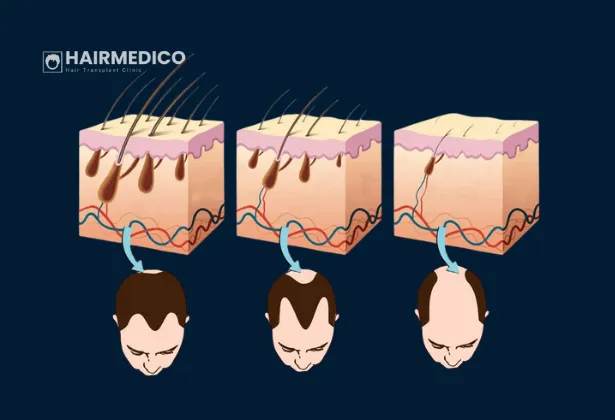
Hair transplantation has evolved dramatically over the past two decades. Modern techniques such as FUE, Sapphire FUE, and DHI have made it possible to restore hair with natural density and long-term stability. However, the true success of any hair transplant procedure is not determined simply by the number of grafts implanted. The real indicator of surgical quality is follicular survival rate.
From a clinical perspective, follicular survival rate refers to the percentage of transplanted grafts that successfully establish blood supply, survive the healing phase, and produce healthy hair growth months after the surgery.
Patients frequently ask how many grafts will be implanted during their procedure. As a surgeon, the question I focus on is different: how many of those grafts will survive.
Understanding follicular survival is essential for anyone considering hair transplantation. It is the biological foundation that determines whether a procedure results in natural density or disappointing coverage.
In this article, I will explain the science behind follicular survival, the surgical factors that influence graft viability, and why modern surgeon-led techniques can significantly improve long-term outcomes.
Hair follicles are not simply strands of hair. They are complex mini-organs located within the skin, supported by a delicate vascular and cellular environment.
Each follicular unit contains multiple components including:
• Dermal papilla cells
• Stem cells located in the bulge region
• Sebaceous glands
• Microvascular networks
• Connective tissue structures
When a graft is extracted during a hair transplant procedure, this biological unit must remain intact. If the dermal papilla or surrounding tissue is damaged, the follicle may fail to regenerate a healthy hair shaft.
The survival of the follicle therefore depends on two critical phases:
Surgical extraction and handling
Post-implantation vascular integration
If both phases are managed correctly, modern hair transplant procedures can achieve survival rates exceeding 90–95%.
The scientific principles governing follicular preservation are central to modern surgical planning in advanced hair restoration procedures.
✓ Learn more about modern surgical approaches here: https://hairmedico.com/hair-transplant
Many patients assume that once a graft is implanted, the hair immediately begins growing. In reality, transplanted follicles go through several biological phases.
Immediately after implantation, the graft enters a fragile ischemic phase. During this period the follicle temporarily lacks its own blood supply.
Within the first few days, the surrounding tissue begins forming new microvascular connections. This process is called angiogenesis.
During the following weeks:
• New capillaries supply oxygen and nutrients
• The follicle adapts to its new environment
• Temporary hair shedding occurs
This shedding phase, often called shock loss, is completely normal. The follicle itself remains alive beneath the skin.
Between three and four months after surgery, the follicle enters a new growth phase and begins producing a new hair shaft.
By twelve months, the majority of surviving grafts will have produced mature hair.
Although follicular biology plays a central role, surgical technique is equally important.
Several factors can influence graft survival:
• Extraction trauma
• Time outside the body
• Graft dehydration
• Temperature exposure
• Implantation technique
• Vascular density of the recipient area
Each step of the procedure must therefore be carefully controlled.
The extraction phase is the first point where follicular survival can be compromised.
In modern FUE procedures, a micro-punch device is used to isolate follicular units from the donor area.
If the punch diameter is too large, unnecessary tissue damage occurs. If it is too small, follicles may be transected.
Precision in extraction is therefore critical.
Advanced surgeon-controlled extraction techniques help reduce transection rates and preserve follicular integrity.
Once extracted, grafts must be stored in a protective solution before implantation.
During this period, the follicles are temporarily separated from blood supply. Without proper hydration and temperature control, cellular damage can occur.
Modern clinics use specialized preservation solutions designed to:
• Maintain cellular metabolism
• Reduce oxidative stress
• Prevent dehydration
• Stabilize temperature
These solutions can significantly improve graft viability during longer procedures.
Another important factor influencing survival is the amount of time grafts remain outside the body.
Research shows that prolonged exposure to air can reduce follicular viability.
In well-organized surgical settings, grafts are implanted as quickly as possible after extraction.
Many surgeon-led clinics follow structured workflows where extraction and implantation occur simultaneously, reducing graft exposure time.
This approach improves survival rates and promotes stronger regrowth.
The recipient area must be prepared before graft implantation. This involves creating micro-incisions that will receive the grafts.
These incisions must respect the vascular architecture of the scalp.
If incisions are placed too densely or aggressively, blood supply may be compromised.
This can lead to:
• Reduced graft survival
• Delayed healing
• Uneven hair growth
Experienced surgeons therefore plan recipient sites carefully, balancing density goals with vascular safety.
The surgical philosophy behind vascular-safe implantation is a key principle in modern surgeon-led hair transplant procedures.
✓ Learn more about the clinical approach of Dr. Arslan Musbeh here: https://hairmedico.com/dr-arslan-musbeh
Different hair transplant techniques may influence follicular survival in different ways.
FUE is currently the most widely used technique in modern hair transplantation.
Advantages include:
• Minimal scarring
• Precise graft harvesting
• Faster healing
When performed correctly, FUE can achieve very high survival rates.
Sapphire FUE uses sapphire blades for recipient site creation.
These blades create extremely precise micro-incisions that can:
• Reduce tissue trauma
• Improve graft placement accuracy
• Enhance vascular preservation
DHI uses a specialized implantation pen that allows grafts to be placed directly after extraction.
Advantages may include:
• Reduced graft handling
• Shorter graft exposure time
• Precise angle control
However, survival outcomes still depend largely on surgical expertise rather than the device itself.
One of the most underestimated factors affecting follicular survival is surgeon experience.
Hair transplantation is not a purely mechanical process. It requires deep understanding of:
• Hairline design
• Vascular anatomy
• Donor management
• Density planning
Clinics that prioritize surgical oversight often achieve higher graft survival rates compared with high-volume production clinics.
Experience allows the surgeon to adapt technique according to each patient’s scalp biology and hair characteristics.
When survival rates are high, fewer grafts are required to achieve natural density.
When survival rates are low, even large graft numbers may produce weak results.
This is why graft quantity alone should never be the primary focus of a hair transplant consultation.
True density depends on:
• Survival rate
• Hair caliber
• Curl pattern
• Recipient area size
A well-planned surgery with excellent survival rates will almost always outperform aggressive graft numbers with poor biological outcomes.
Ethical surgical planning prioritizes long-term success over short-term numbers.
Responsible surgeons consider:
• Donor preservation
• Future hair loss progression
• Density sustainability
• Natural aesthetic balance
This approach ensures that patients receive results that remain stable for decades.
Pricing models based on surgical expertise rather than raw graft counts also help support ethical treatment planning.
✓ You can review the procedure-based pricing philosophy here: https://hairmedico.com/price
Hair transplantation is often marketed using graft numbers, but biology ultimately determines success.
A graft that survives becomes a permanent hair follicle.
A graft that fails is lost forever.
Understanding follicular survival helps patients make informed decisions about their surgery.
When extraction precision, graft handling, vascular safety, and surgical planning are all optimized, modern hair transplant techniques can achieve exceptional survival rates and natural results.
Hair restoration is not simply about moving hair.
It is about preserving life within each follicle.

 FR
FR
 DE
DE
 RU
RU
 ES
ES
 PL
PL
 PT
PT
 IT
IT
 CS
CS
 AR
AR
 TR
TR
 Free Hair Analysis
 Whatsapp